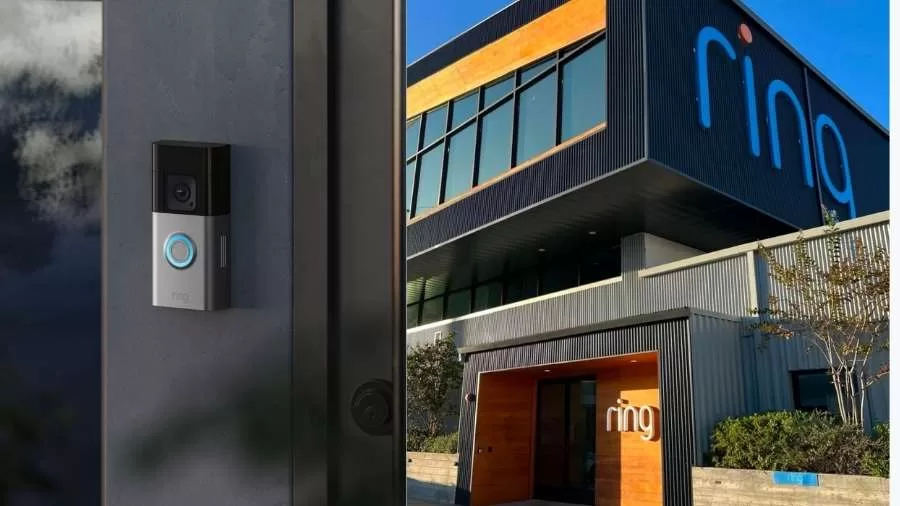
Ring founder Jamie Siminoff is back at the center of the company he originally built in his garage—now owned by Amazon—with a renewed focus on artificial intelligence. After stepping away in 2023 following years of intense work and corporate scaling, Siminoff returned with a different vision for Ring’s future: transforming it from a video doorbell company into a full-scale AI-powered “intelligent assistant” for the home.
This shift is not just a product upgrade. It represents a broader redefinition of what home security devices are expected to do in the age of AI.
From Video Doorbells to Intelligent Home Systems
Originally, Ring built its reputation on a simple idea: a video doorbell that lets homeowners see who is at their door from anywhere. Over time, that concept expanded into a wider ecosystem of cameras, sensors, and neighborhood security tools.
Now, with AI at the center, Ring’s ambition is significantly larger.
Siminoff describes the new direction as turning “AI backwards”—framing it as IA, or intelligent assistance. The goal is to reduce the mental effort required from users by having the system interpret events, filter noise, and proactively surface what matters.
Instead of users constantly monitoring camera feeds or alerts, Ring wants its system to act more like a continuous interpreter of home activity.
AI Features That Redefine Home Surveillance
Ahead of CES, Ring introduced several AI-driven features that push the platform into more advanced territory:
- Fire and smoke detection alerts
- “Unusual activity” detection
- Conversational AI for interacting with the system
- Early facial recognition capabilities
- Event-based intelligent notifications
These tools are designed to move Ring beyond passive recording into active interpretation of real-world situations.
For example, instead of simply notifying a user that motion was detected, the system could identify context—such as fire risk, unfamiliar activity, or routine household patterns—and prioritize alerts accordingly.
However, these capabilities also intensify ongoing debates around surveillance, data collection, and privacy.
Fire Watch: AI Inspired by Real-World Disaster
One of the most notable additions is Fire Watch, a feature developed in partnership with wildfire monitoring organization Watch Duty.
The system allows users to opt in and share footage during large-scale fire events. AI then analyzes submitted video to detect signs of smoke, flames, and embers, helping create a broader situational map that can assist emergency responders.
The feature has personal significance for Siminoff, who was directly impacted by the Palisades fires, which damaged his home and destroyed the garage where Ring was originally founded.
In this sense, Fire Watch is both a product feature and a response to lived experience—linking AI surveillance directly to disaster response.
Search Party: AI for Finding Lost Pets
Another major feature, Search Party, applies AI to one of the most emotional use cases in home security: lost pets.
The system works by matching uploaded images of missing animals against Ring’s network of shared camera footage (from users who opt in). It uses pattern recognition technology similar to facial recognition, but applied to animals.
According to Siminoff, the system is already helping reunite at least one family per day with their lost pets, exceeding early expectations.
While the feature demonstrates clear practical value, it also highlights how deeply interconnected Ring’s ecosystem has become with user-generated surveillance data.
The Return of Facial Recognition: Familiar Faces
Perhaps the most controversial feature is Familiar Faces, an AI system designed to recognize recurring individuals who appear at a home.
The system allows homeowners to label frequently seen people—such as family members, babysitters, or neighbors—so the system can adjust notifications accordingly. For example, instead of alerting every time a child arrives home, the system might simply confirm their arrival.
Ring positions this as personalization: reducing unnecessary alerts and making the system more context-aware.
However, privacy advocates have raised concerns about the normalization of facial recognition in residential environments, particularly as the system stores identity-linked data tied to private homes.
Law Enforcement Partnerships and Privacy Debate
Ring’s relationship with law enforcement has long been one of its most controversial aspects.
The company previously allowed police to request footage from users through formal channels but later scaled back those programs following backlash. More recently, Ring has introduced new integrations with companies like Flock Safety and Axon, which again enable structured ways for authorities to request user footage in certain situations.
Siminoff argues that participation is always optional, and that users maintain control over whether they respond to requests. He also emphasizes that requests are anonymized unless users choose to share data.
Supporters argue that such systems can help solve crimes and respond to emergencies. Critics, however, warn that widespread private surveillance infrastructure could normalize mass data collection and increase risks of misuse.
A Broader Expansion Beyond Homes
Ring is also expanding beyond residential customers into commercial and public environments.
New offerings now include:
- Commercial-grade camera systems
- Environmental sensors
- Solar-powered mobile surveillance trailers
These systems are designed for use in locations such as:
- Businesses and retail spaces
- Construction sites
- Schools and campuses
- Festivals and public events
- Parking areas and large outdoor spaces
This shift significantly broadens Ring’s scope—from neighborhood home security into large-scale public surveillance infrastructure.
The Central Tension: Convenience vs Privacy
At the core of Ring’s evolution is a familiar trade-off in modern AI systems: increased automation and convenience in exchange for deeper data collection.
Siminoff frames the transformation as a trust-based system, arguing that users choose how much they want to share and can opt out at any time. He also points to real-world cases where Ring footage has contributed to public safety investigations.
Critics, however, point out that the growing density of cameras, combined with AI-driven analysis and law enforcement integrations, raises long-term questions about surveillance boundaries in everyday life.
Conclusion: Ring’s AI Future Is Bigger Than the Doorbell
Ring is no longer just a video doorbell company. Under its new AI direction, it is evolving into a distributed sensing network designed to interpret, summarize, and respond to activity across homes and public spaces.
The idea of an “intelligent assistant” for the home reframes surveillance as proactive interpretation rather than passive recording.
Whether this future is seen as empowering or intrusive will likely depend on one central question: how much visibility into daily life people are willing to trade for automation, security, and convenience.